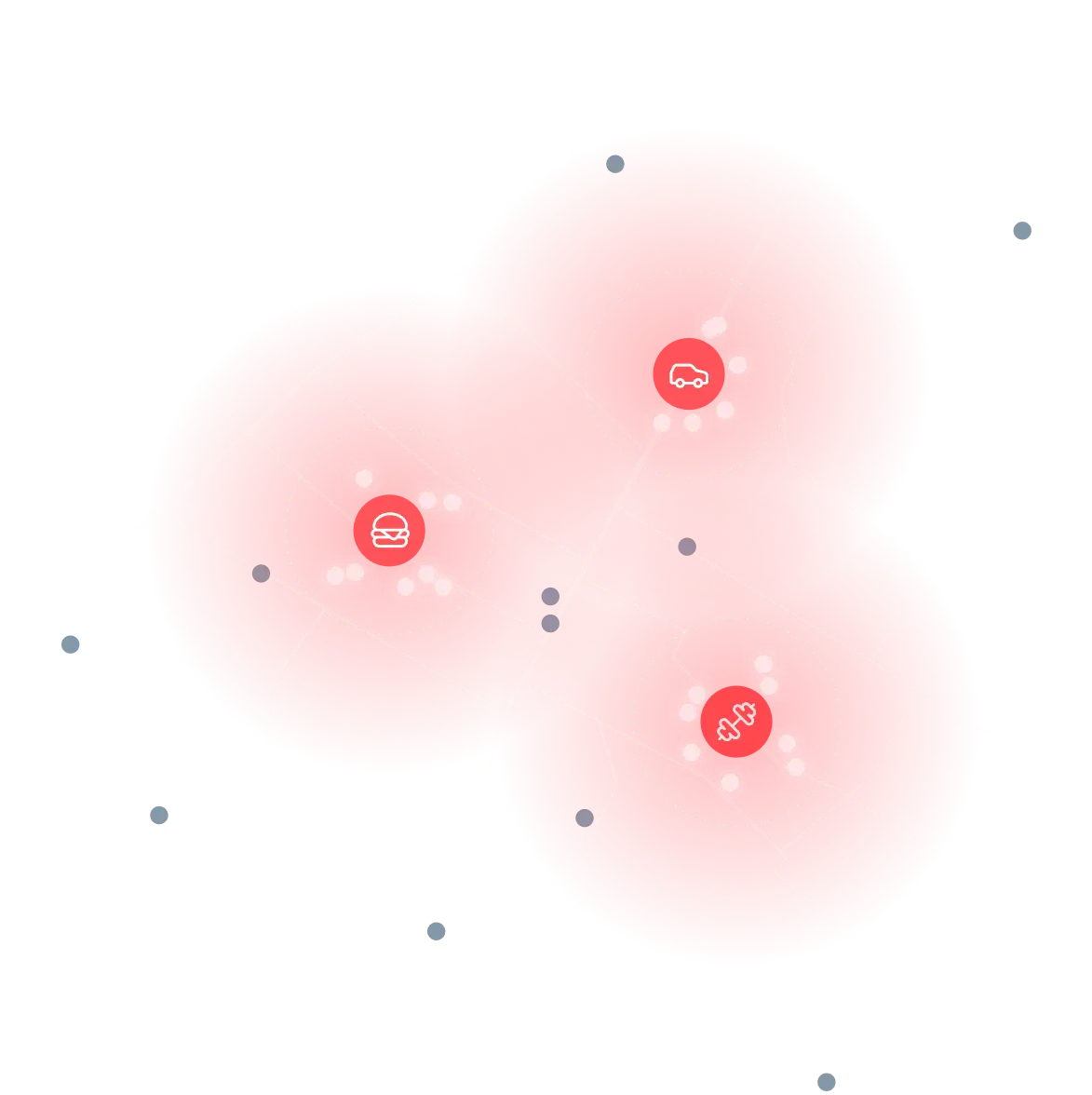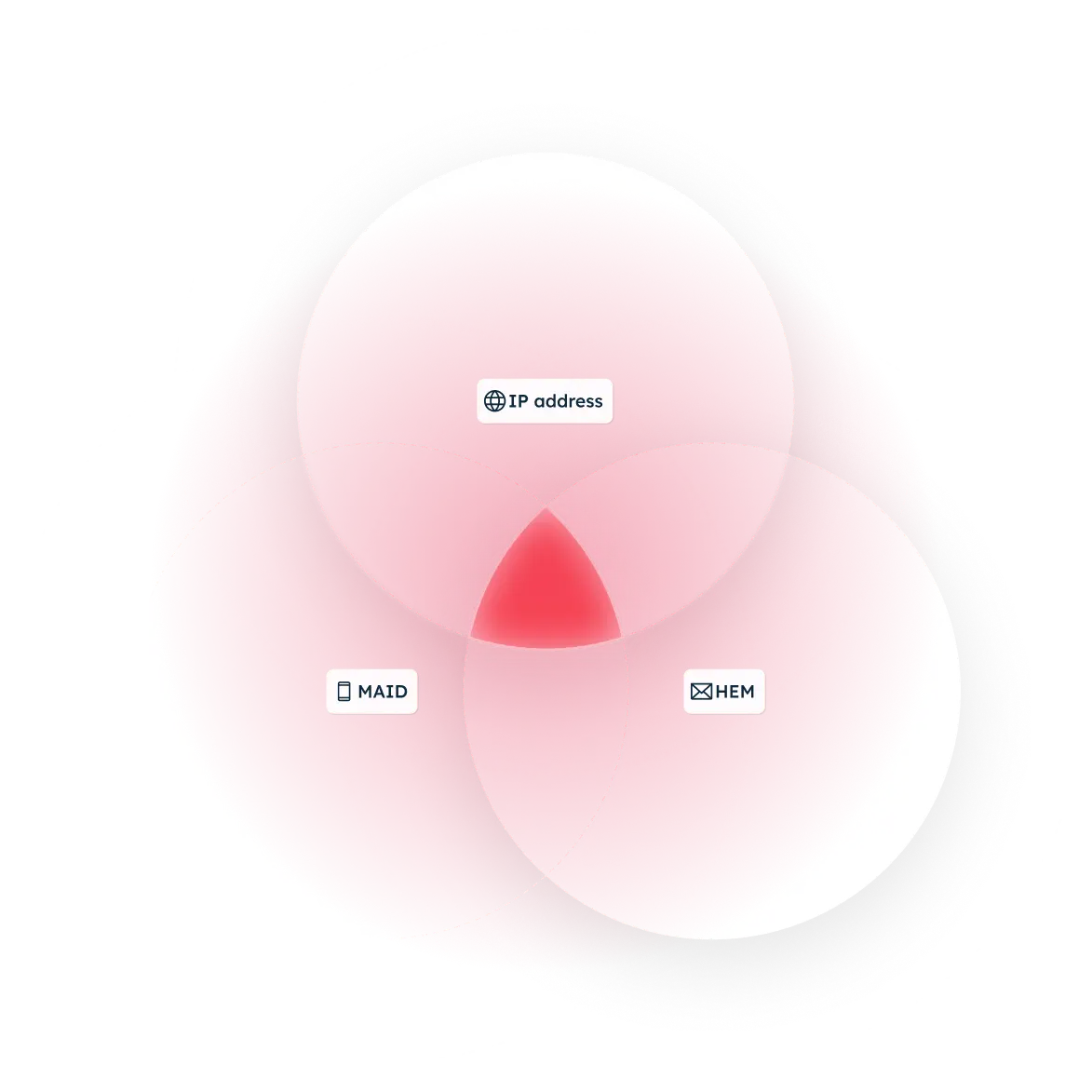
Venn diagram with three overlapping red circles labeled IP address, MAID, and HEM.

Three identifiers. One identity. Every screen.

Dymos links real-world mobility across MAID, IP and HEM — resolving fragmented signals into one person you can reach on any screen. This is the connective layer: it turns the foundational mobility signal into addressable, activatable identity.

Built on real-world evidence

Broader addressable reach and reduced frequency waste across email and mobile channels.

Linked, not just collected

MAID, IP and HEM resolved into a single identity, so reach follows the person, not the device.

Ready to activate

Segments drop into your DSP, DMP or CDP, no preprocessing, no rebuilds, no waiting.

Cross-ID Mobility

How it works

We judge whether an IP is a device's home connection from three signals working together: how uniquely the IP ties to that device, how consistent its real-world observations are, and how regularly the two reconnect.
  • Density & exclusivity: how many devices share an IP, and how uniquely it ties to one.
  • Geographic consistency: whether a device's real-world observations hold together in one place.
  • Recurrence & stability: repeated connections over time are what make a link trustworthy.
  • Observed, not fixed: associations are day-level and refreshed, never a permanent mapping.
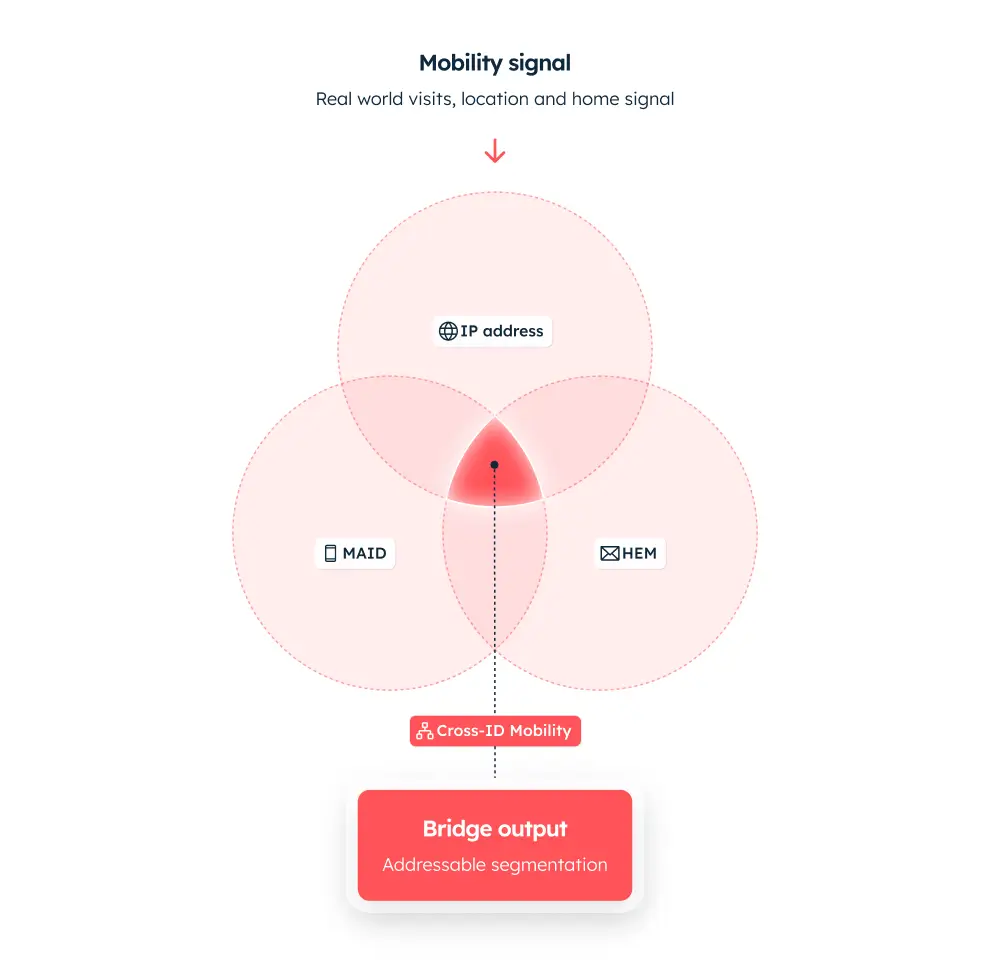
Venn diagram showing IP address, MAID, and HEM intersecting in Cross-ID Mobility for Bridge output segmentation.

One mechanic.  Two ways to use it.

An IP, a hashed email, a device ID — on its own, each is just a key. Our edge is the same in every case: we enrich the identifier with mobility-linked behavioral evidence, so it stops being a key and becomes a customer you can read. That single mechanic shows up three ways — and almost no one else holds all the pieces to do it.
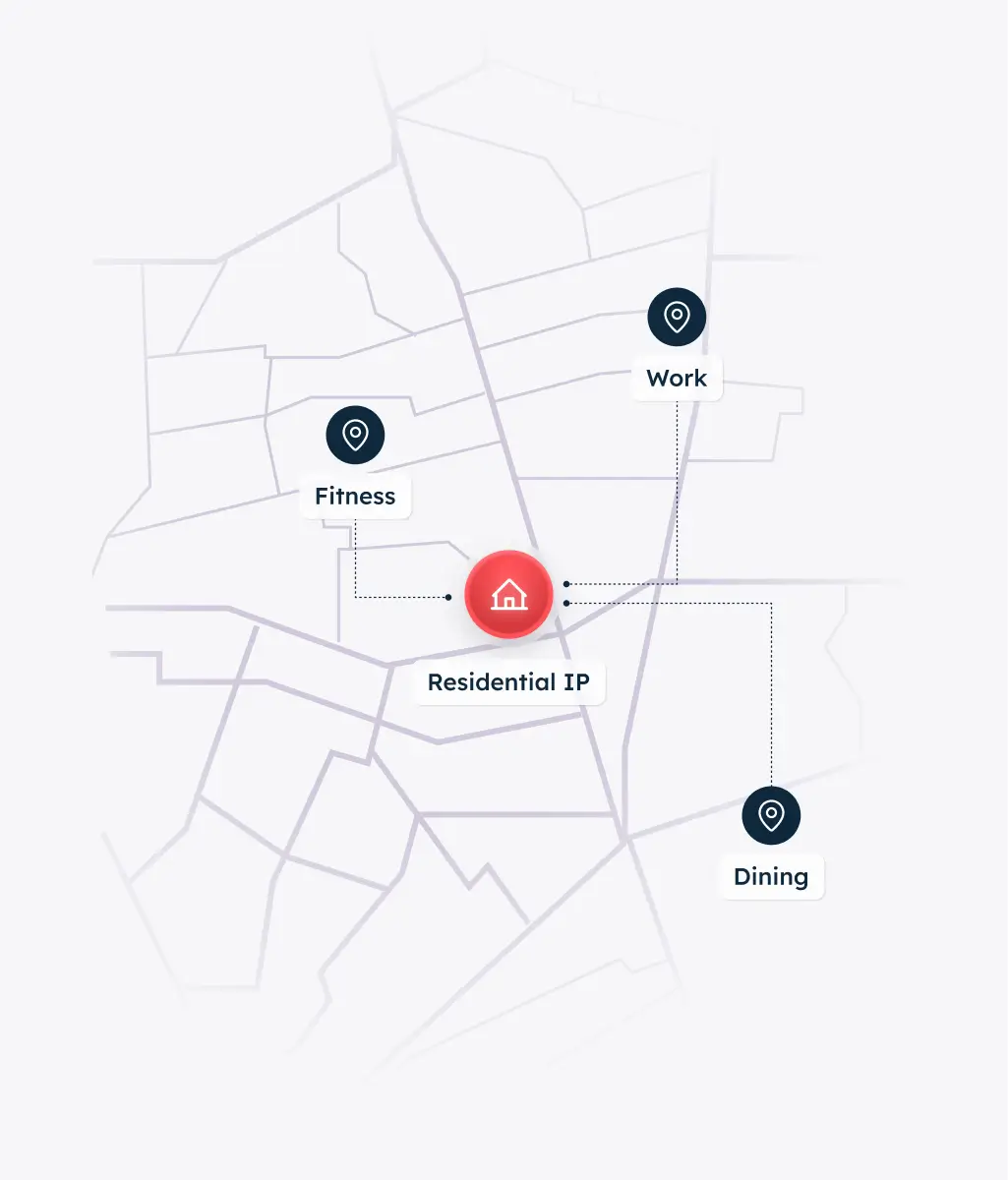
Map showing a central residential IP location connected to fitness, work, and dining spots.
IP ⇔ Location

The IP & Location Loop: behavior, beyond geography

Standard data leaves you with a static dot on a map. We bridge IP ⇔ Location both ways, enriching residential IPs with observed device behavior. We go beyond geography to turn a simple connection into a readable audience.

Residential IP segmentation

Each residential IP inherits the visit and home patterns of the devices linked to it — a location becomes a behavioral segment you can target with intent (conquest, category affinity, trade-area), not broad postal-code spray. Where the evidence is strong enough.

POIs matched to IP addresses

By reading the residential IPs that recur at a venue — from captive or public Wi-Fi — a physical point of interest becomes an addressable IP: hyper-local activation, or a profiling signal for the devices seen there.

Reach where device IDs have gone dark

CTV, the open web, and any cookieless or MAID-less environment have always been the hardest to address. IP becomes the bridge — carrying mobile-grade behavioral signal into the channels that can’t see a device ID, turning previously unaddressable inventory into targetable reach. It drops in as a ready-to-use layer; no rebuilds.

Reach the screens device IDs can't and make the ones you already have mean something.
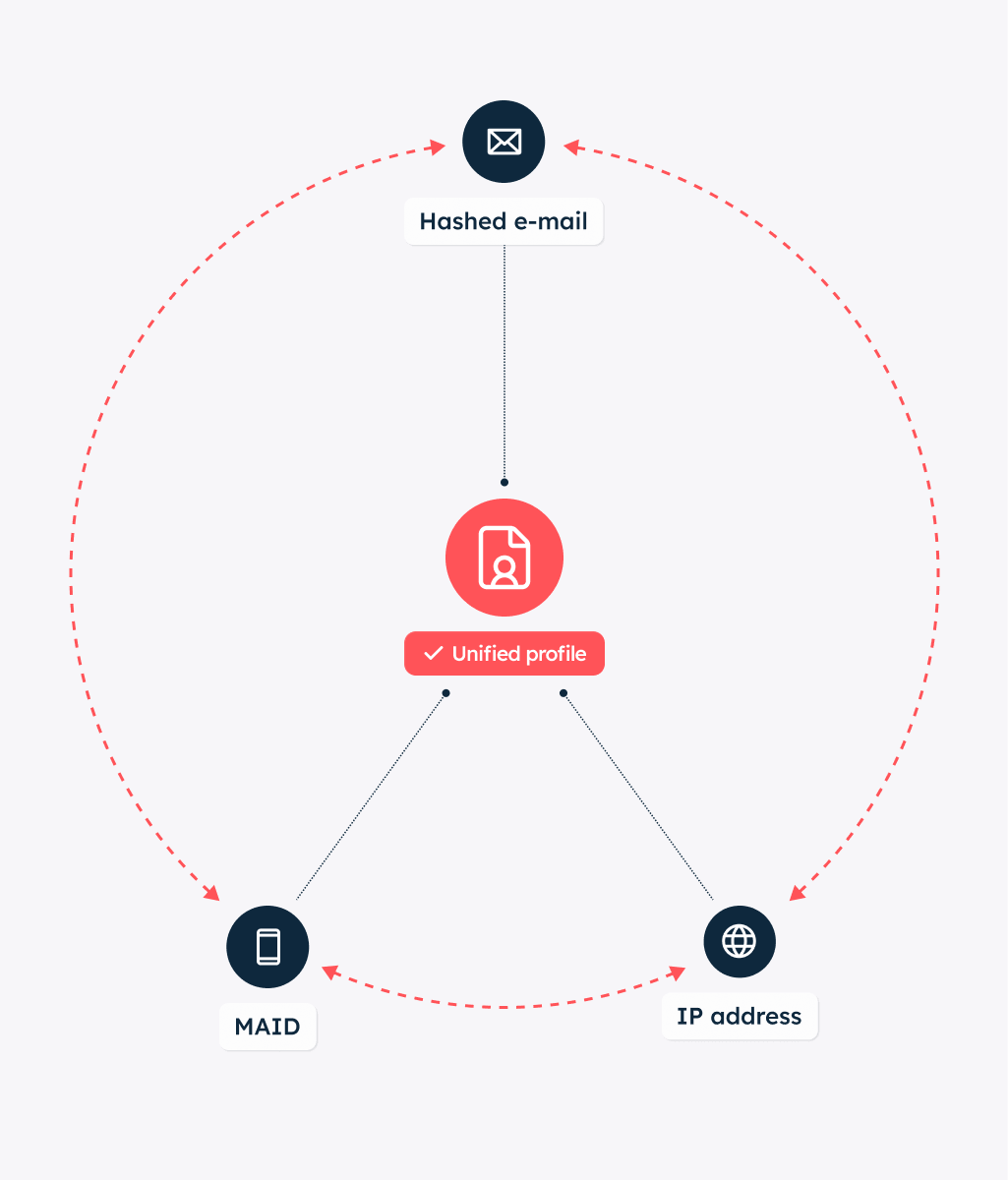
Diagram showing a unified profile linked to hashed email, MAID, and IP address with connecting arrows.
HEM ⇔ IP ⇔ MAID

Unifying HEM, IP & MAID: volume at the identity layer, enriched

A hashed email (HEM) is just a string without context. We connect HEMs directly to IPs and devices (MAID), linking first-party identity to real-world behavior. We bridge the gap between scale and relevance, adding meaning on top of volume at the identity layer.

Coverage at scale, honestly qualified

Large-scale associations linking hashed emails to devices and IPs, refreshed on a regular cadence. Every record is qualified — we separate connections that are live and addressable from those better used as evidence, so your match rate is never quietly padded with links you can’t act on.

Enriched, not just matched

A flat email file becomes a behavioral segment — match becomes understanding. Few competitors can link IDs to real behavior at scale

The same person, wherever you find them

Yout text hActivate across CRM, identity graphs and programmatic : one recognition that holds across every screen.ere...

Reach the customers behind your hashed emails and understand them, not just match them.

Put to work

What teams do with it

Whether the gap is between channels, between screens, or between data you hold and people you can reach, it comes down to one thing: connecting fragmented identifiers into one customer you can recognize and act on.

When the same customer shows up as a different ID on every channel, and you need to tie those identifiers back to one person.

When reach breaks between screens, you need recognition that follows the audience, not the device.

When your first-party profiles are rich but flat and you need real-world geographic and behavioral context to deepen them.

When your inventory can't see device IDs, and you need household-level reach to activate at all.

When you already hold hashed-email or IP inventory and you need a mobility-based behavioral layer to make it addressable.

Trusted by teams at

What we do

Three layers, one foundation.

Each works on its own, and they are strongest together.
Ready to turn real-world movement  into addressable segmentation?

Real-world evidence
Identity-resolved
Activation-ready

Already trusted by 200+ of the world’s leading enterprise customers across the advertising ecostsem

Get in touch