Real behavior.
Ready to activate.
Audiences is the segmentation layer: it turns the foundational mobility signal into segments you can run on any channel. Three things make a Dymos audience different.
How it works
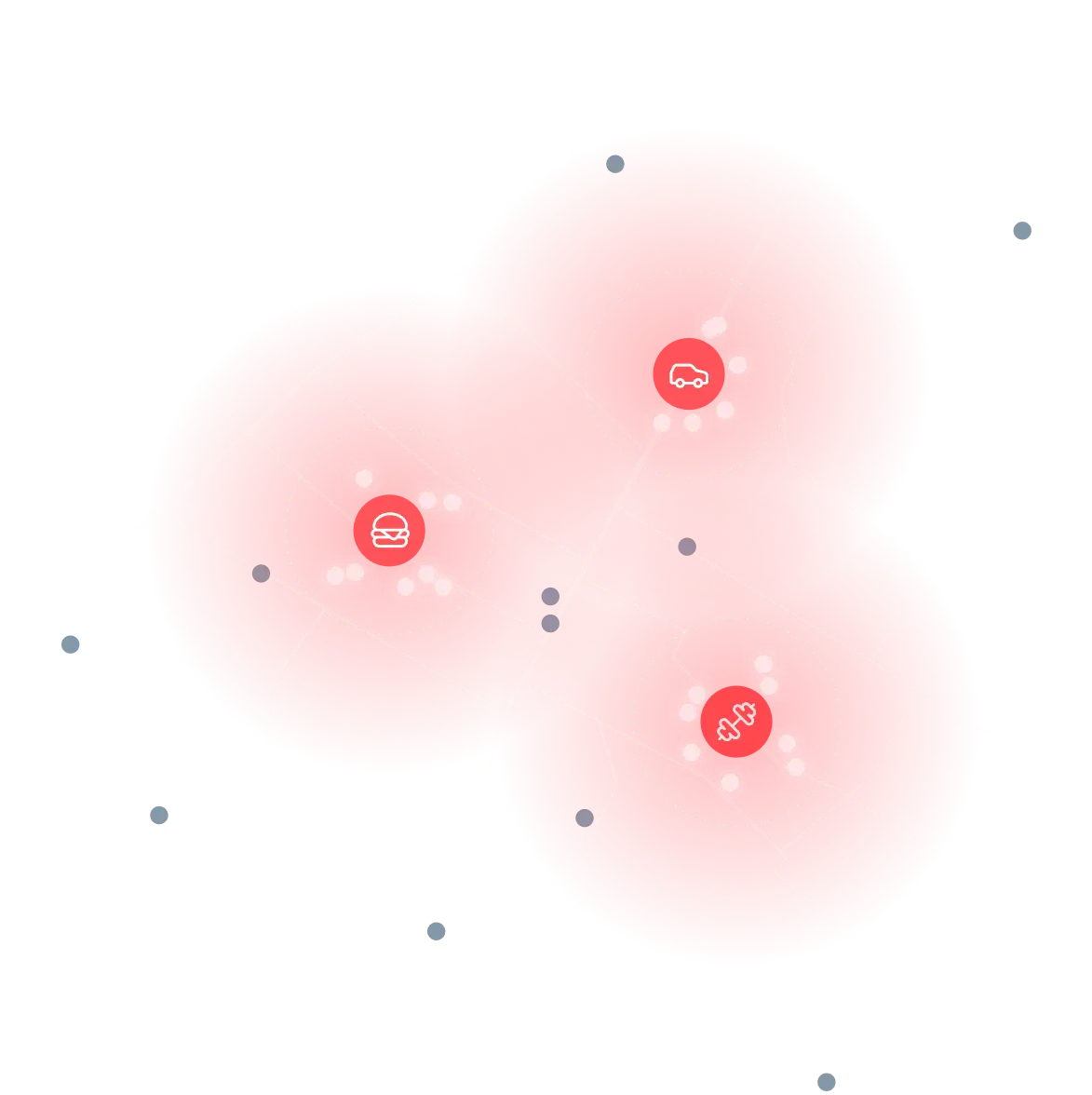
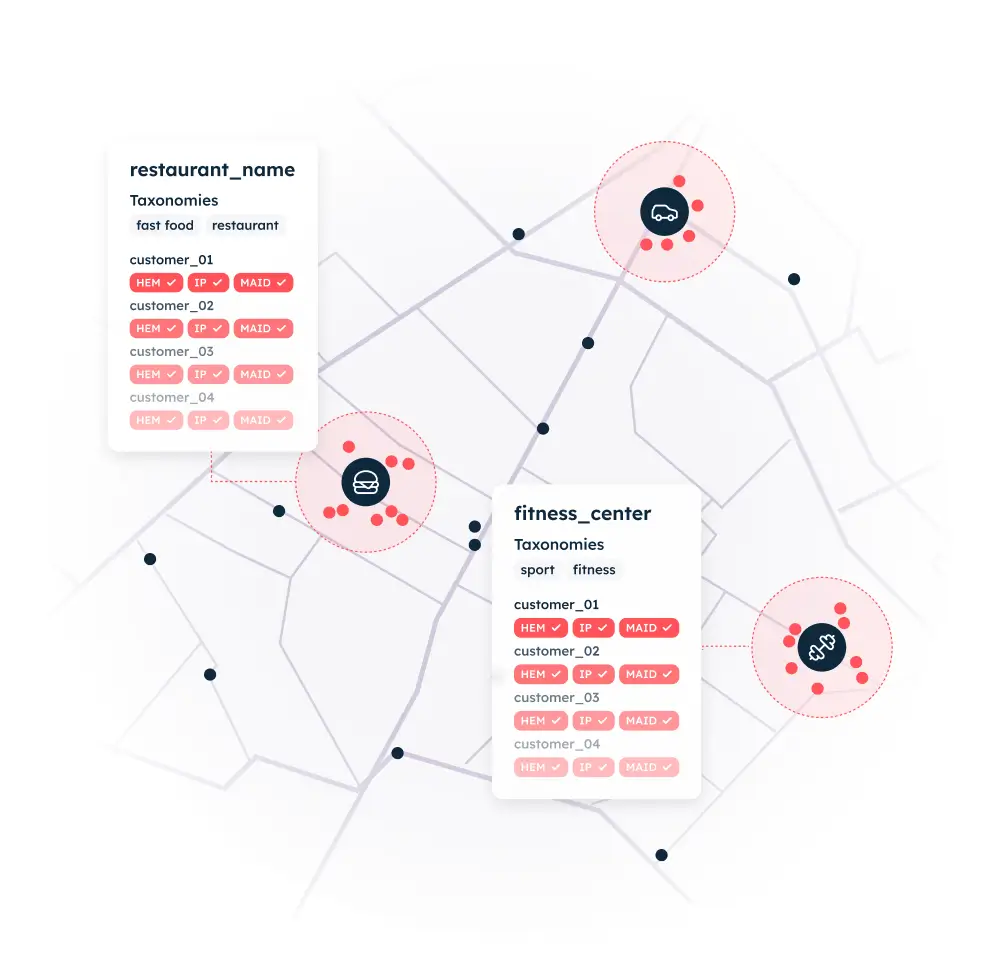
- Visits come first: Raw presence is modeled into real visits to brands, categories and points of interest.
- Segments map to a taxonomy: Visits are classified by brand, category or custom list, kept separate from the audience name, so segments can be created or changed without recomputing visits.
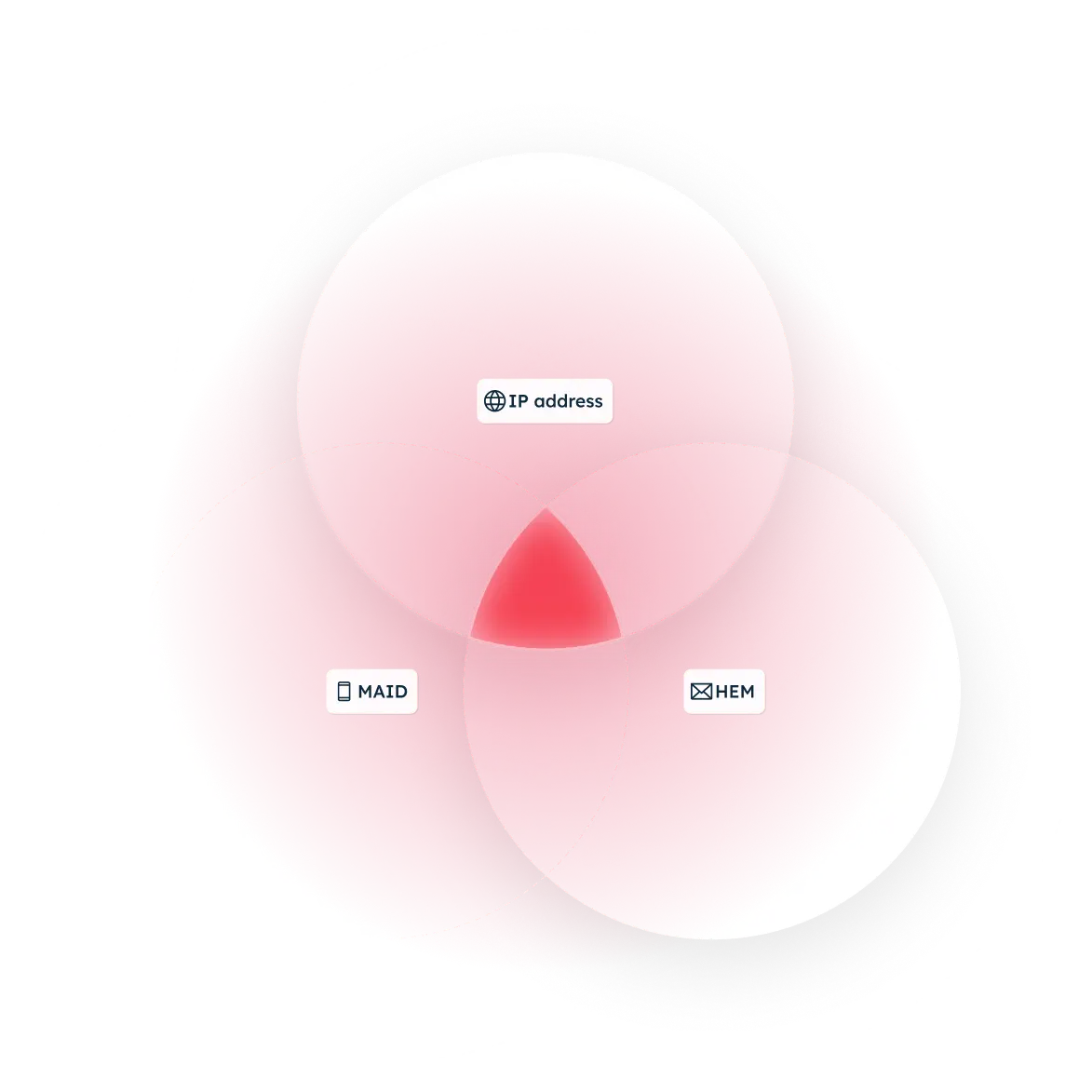
- The channel sets the identifier: MAID for in-app, residential IP for CTV and desktop, HEM when you start from CRM.
- Built for scale: Segments are sized to spend and optimize, and refreshed regularly.
Three audience families
One audience layer, three families. Pick the family that matches your goal, and the identifier that matches your channel.
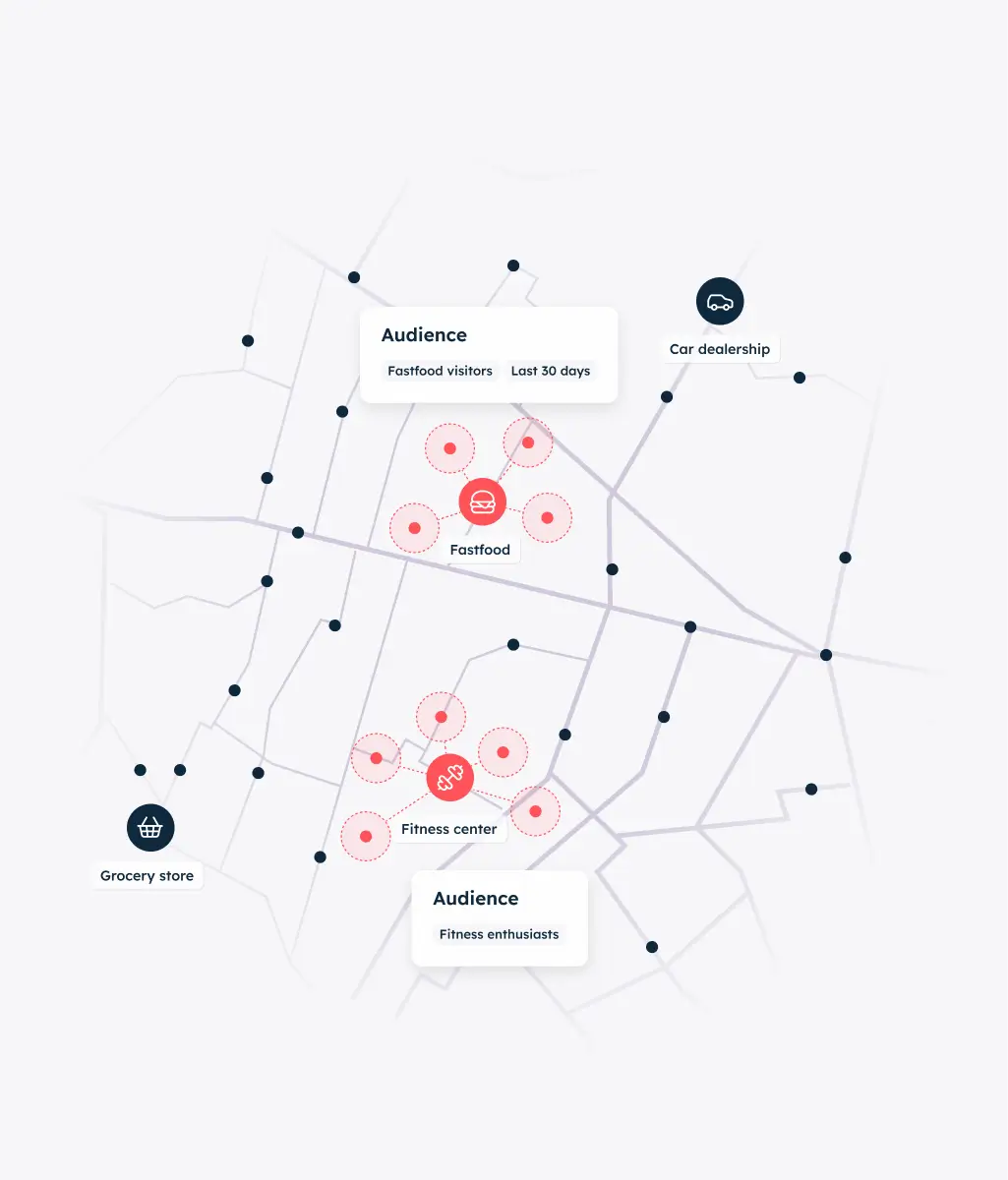
Visit audiences
Reach people by where they actually went. Our visit modeling separates genuine visitors from passers-by, so a segment reflects people who actually stopped, and can be tuned toward those likely to have bought.
Granular Audience
Real-World Behavior
Activation
Reach the people who actually showed up, not the ones a model guessed at.
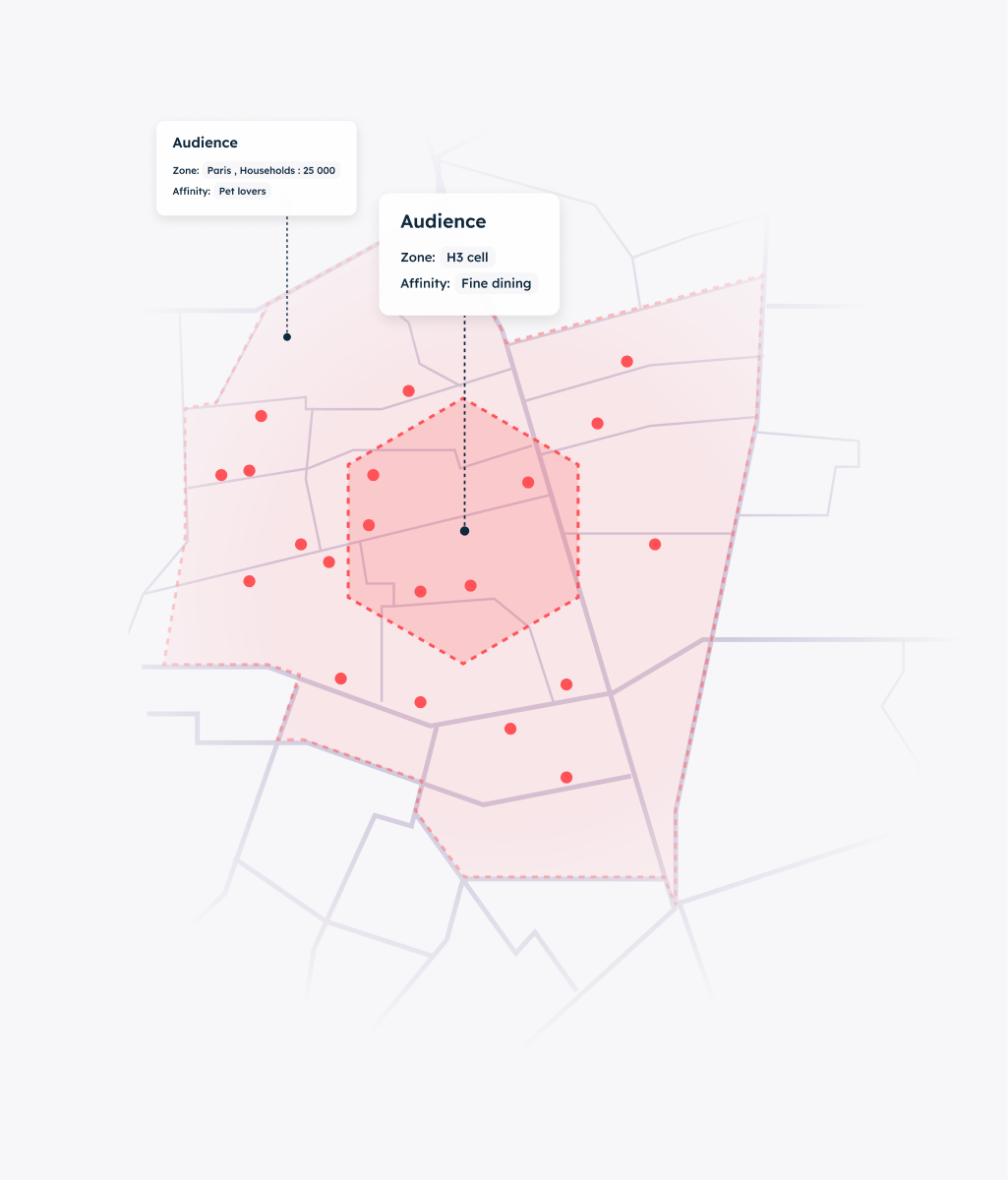
Location and proximity audiences
Audiences defined by where people are based: home or main area, postal code, H3 cell, or a custom geography you draw yourself, from store catchments to business districts and event venues.
Target by where people genuinely are, down to the area that matters.
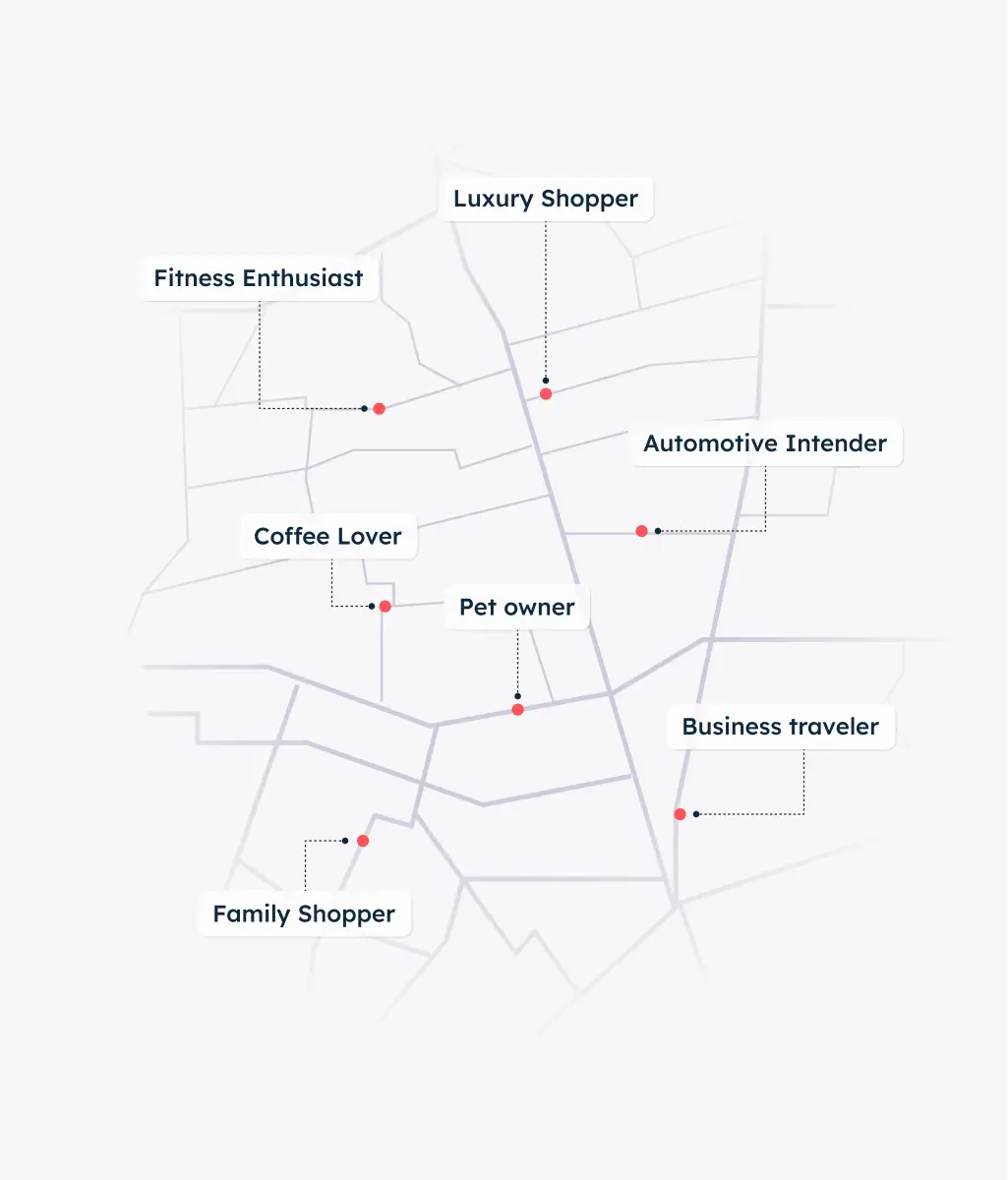
Profile audiences
Affinities, purchasing-power proxies and territorial profiles, built from real-world behavior rather than declared data. Example segments range from Gym Goers and Pizza Lovers to Frequent Air Travelers and Museum Visitors, available in major markets. Useful for planning, audience qualification and lookalike modeling, across MAID, IP and HEM.
Add the why behind the where, so a segment explains interest, not just location.

What teams do with it
When you need to activate quickly across more identifiers and broader geographies, without standing up your own location pipeline first.
When demographic or modeled data is not enough, and you want audiences grounded in where people actually went.
When you run conquest, category-expansion or trade-area strategies that generic data cannot support.
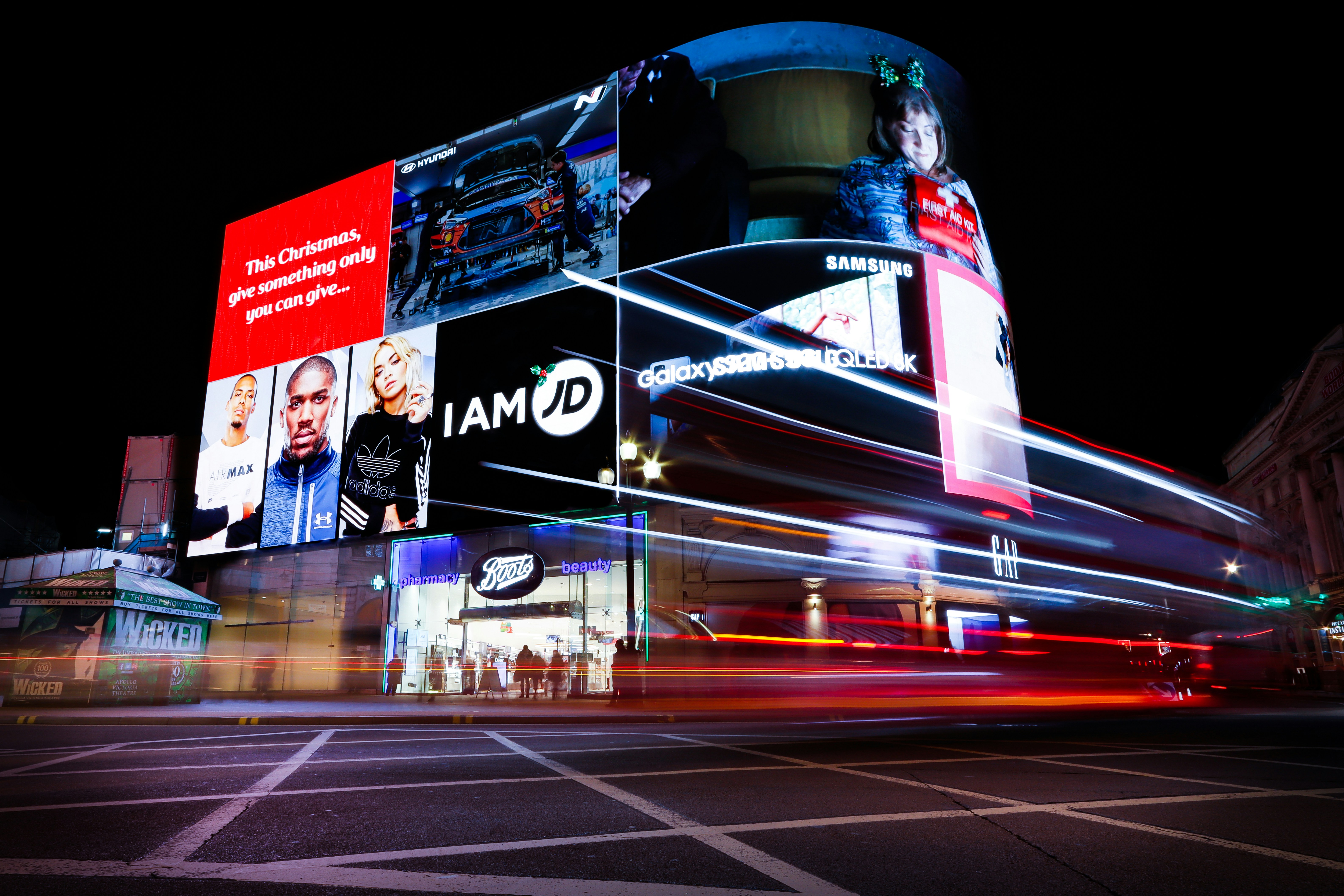
When you plan, measure or extend out-of-home and DOOH campaigns, and need to know which screens reach which audiences, and when.
When you need audiences sized to spend and optimize, not just to sample.




Trusted by teams at








Three layers, one foundation.
Each works on its own, and they are strongest together.