Reading time:
Last updated:
July 30, 2026
What visit-based audiences are
A visit-based audience is a group of pseudonymous identifiers that share a real-world visit: people observed at a particular brand, a category of place, or a defined area. The defining feature is the basis, an observed visit, not an inference about who someone is.
That basis is what makes them powerful. A demographic audience guesses that a certain group might be interested in something. A visit-based audience reflects what people actually did, which tends to track intent far more closely.
How they differ from demographic and modeled audiences
Traditional audiences lean on demographics, age, gender, household income, or on modeled lookalikes built from small samples. These are assumptions about people. Visit-based audiences start from evidence instead: the places people were actually observed. That makes them stronger exactly where modeled data runs thin, in conquest, trade-area and local strategies, and it captures real-world category engagement that demographics miss.
How visit-based audiences are built
The raw material is observed mobility, where devices are seen over time. The crucial step is visit modeling, which separates genuine visitors from people who merely passed nearby. A segment is only as good as this distinction: a list padded with passers-by reaches the wrong people and wastes spend.
Strong visit modeling goes further and can tune toward those most likely to have acted, for example, people who dwelled long enough to have made a purchase rather than everyone who crossed the threshold. The result is an audience that reflects people who actually stopped, sized for activation.
The three lenses: brand, category and area
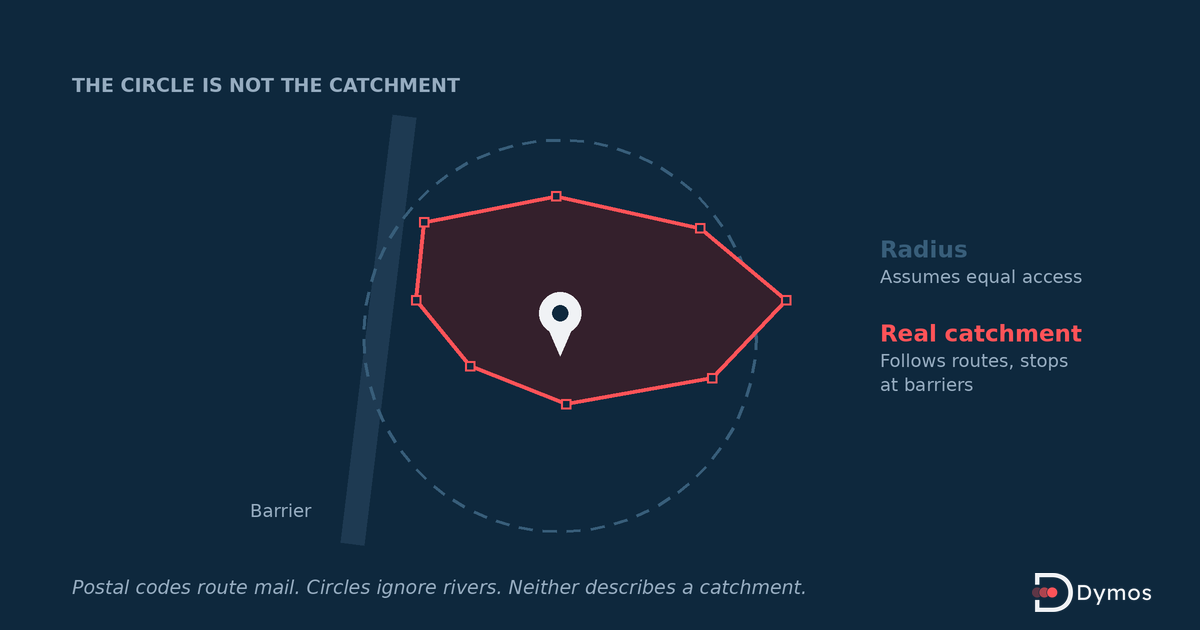
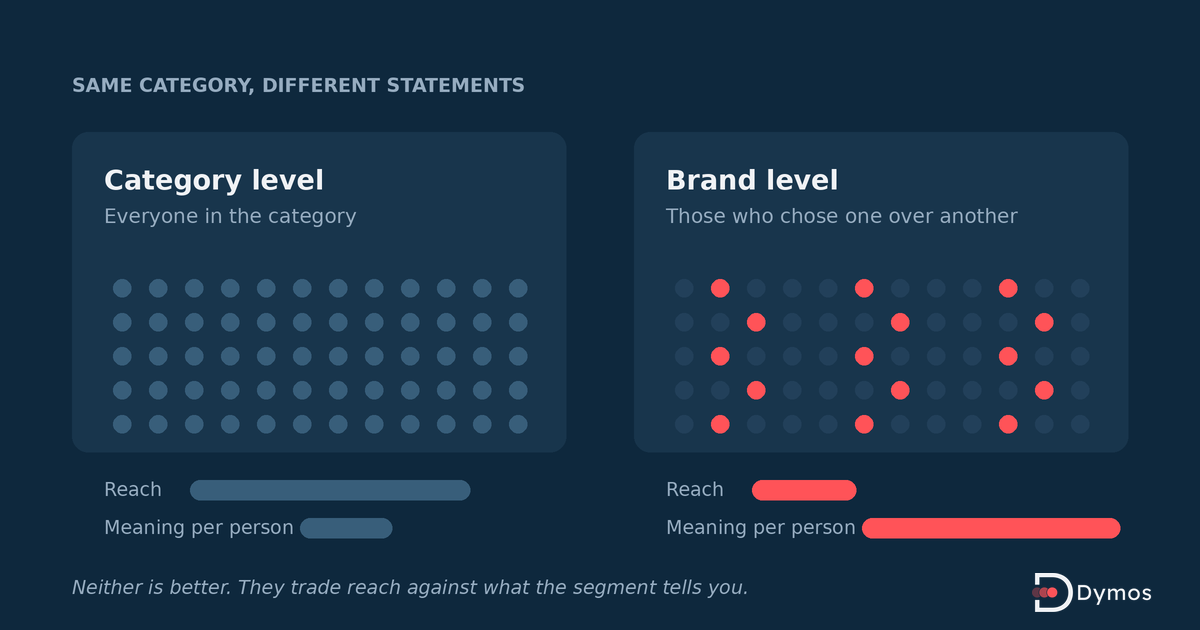
Visit-based audiences are usually built through three lenses. Brand-level audiences group visitors to specific retailers, chains or venues. Category-level audiences broaden that to a whole behavioral category, quick-service dining or fitness, for example. And area-level audiences are defined by a geography you draw, a store's trade area, a business district, or a competitor's catchment. Most real campaigns combine them.
What you can do with visit-based audiences
The use cases are the ones where real behavior beats demographic guesswork. Conquest: reach people observed at a competitor's locations. Retargeting: re-engage people who visited your own. Trade-area planning: concentrate spend on the catchments that matter. And measurement: because the audience is grounded in observed visits, it gives you a real-world baseline to measure outcomes like store visits against.
Visit-based audiences and privacy
Visit-based audiences are built from pseudonymous signals, not personal profiles. People are grouped by a shared visit, not identified by name, and the audience describes a reachable group and how it behaves, not who its members are. The value comes from the pattern, real-world behavior at scale, not from exposing any individual.
Bringing it together
Visit-based audiences reach people by where they actually went. Built on observed visits, tuned to filter out passers-by, and available by brand, category or area, they turn real-world behavior into a segment you can activate, which is why they outperform demographic guesswork in exactly the moments that matter.
Frequently asked questions
What is a visit-based audience?
A group of pseudonymous identifiers observed visiting a particular brand, category of place or defined area, used to reach people by where they actually went rather than by demographic assumptions.
How are visit-based audiences different from demographic audiences?
Demographic audiences group people by attributes like age and gender, which are assumptions. Visit-based audiences group people by observed real-world visits, which track intent more closely.
How do you separate real visitors from passers-by?
Through visit modeling, which uses signals like dwell time and visit patterns to distinguish people who actually stopped from those who merely passed nearby.
What are visit-based audiences used for?
Conquest, retargeting, trade-area planning and real-world measurement, anywhere real behavior beats a demographic guess.
Are visit-based audiences privacy-safe?
They are built from pseudonymous signals, not personal profiles. People are grouped by a shared visit, not identified individually.