Reading time:
Last updated:
July 27, 2026
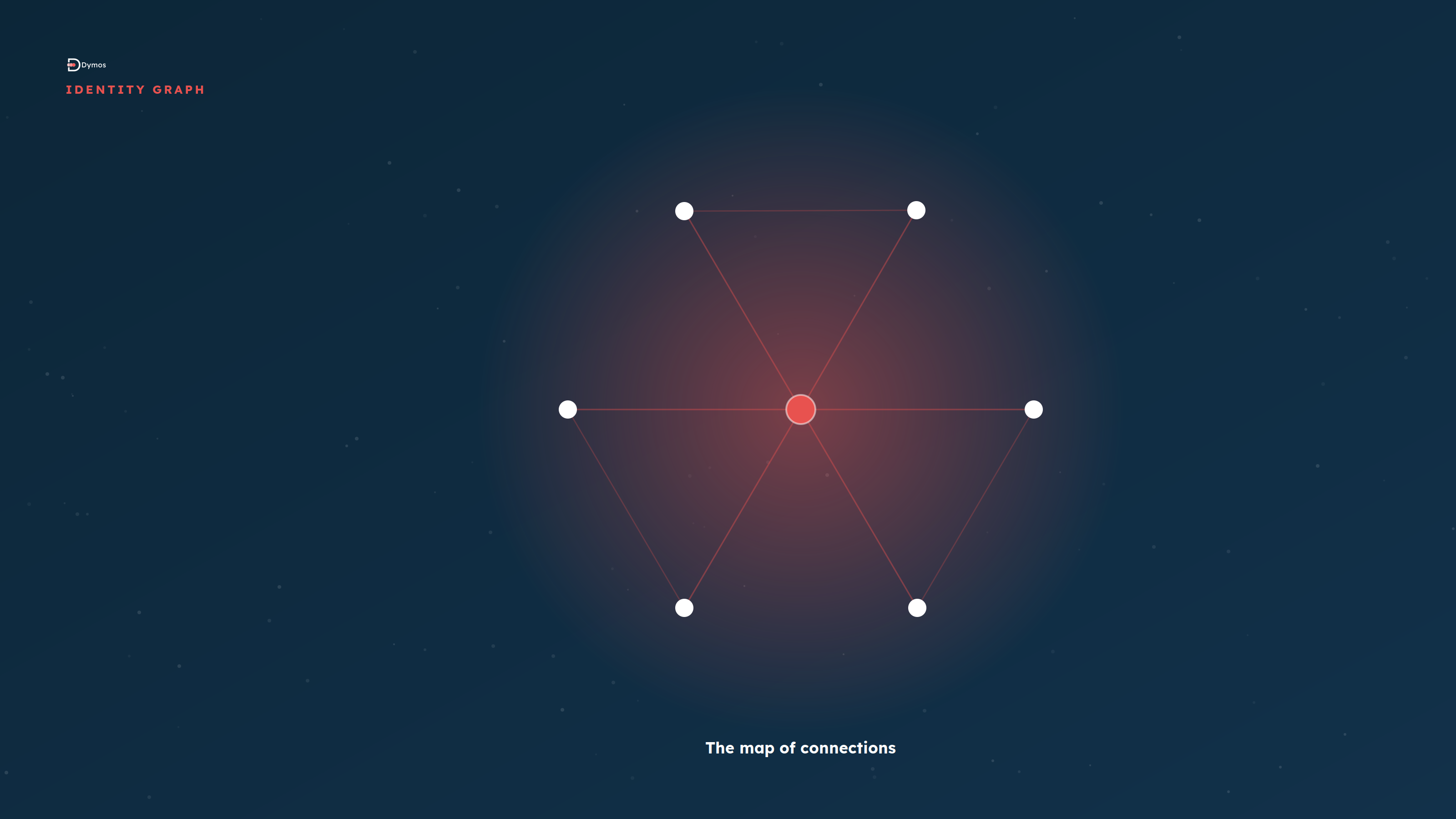
Every person shows up online as a scatter of identifiers: an email in one place, a mobile ID in another, an IP address on the living-room TV. An identity graph is the map that ties those fragments together.
It does not store who someone is. It stores which identifiers are connected, so a platform can treat them as one addressable entity rather than several unrelated ones.
Identity graph vs identity resolution
The two terms are often used interchangeably, but they describe different things. The identity graph is the structure, the map of connections. Identity resolution is the act of using that map to recognize and connect identifiers in practice.
Put simply, the graph is the noun and resolution is the verb. A platform runs identity resolution against an identity graph.
What goes into an identity graph
A graph holds identifiers and the connections between them. The identifiers are usually pseudonymous: hashed emails, mobile advertising IDs, and household IP among them. The connections are the links that indicate two identifiers belong to the same person or household.
Stronger graphs also carry context, such as how recently a connection was observed and how strong the supporting evidence is, so a platform knows how much to trust each link.
Deterministic and probabilistic connections
Connections in a graph are made in two ways. Some rest on strong, observed evidence, for example a hashed email seen alongside a device. Others are inferred probabilistically from patterns when direct evidence is thinner.
Both have a place. What matters is that a good graph distinguishes deterministic and probabilistic connections, so you know which links are backed by observation and which are modeled. A graph that presents everything as equally certain is hiding information you need.
How an identity graph is built and kept current
Building a graph means gathering identifiers at scale, connecting them where the evidence supports it, and refreshing those connections on a predictable cadence. Identity is dynamic: people change devices, providers and email addresses.
A graph that is not regularly refreshed decays, and its match rates quietly fall. Coverage matters too, since a graph is only useful in the markets and identifier types it actually covers.
Why identity graphs matter, and privacy
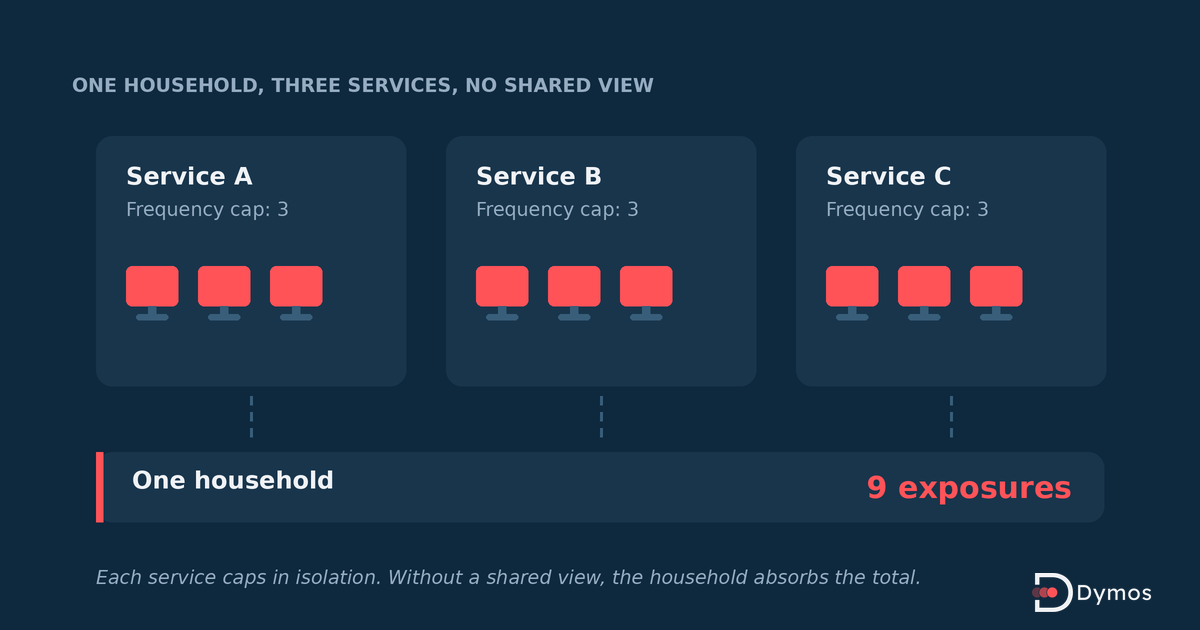
An identity graph turns fragmented reach into coordinated reach: consistent frequency, cross-device activation, and measurement that does not double-count the same person.
Done in a privacy-first way, it works entirely with pseudonymous identifiers and the connections between them, not with personal profiles, so it recognizes an audience without exposing who anyone is.
An identity graph in practice
Consider a customer data platform that wants to give its clients cross-screen reach. On its own, a client's email list only activates in email. By layering an identity graph's connections onto that list, the platform resolves those hashed emails to mobile advertising IDs and to the households behind them.
The same audience can now be reached on mobile inventory and anchored to connected TV, and frequency can be coordinated across all of it. The platform did not rebuild its stack or collect new personal data. It added a map of connections, and a flat email list became a cross-screen audience. This example is illustrative rather than a specific customer, but the pattern is common.
Frequently asked questions
What is an identity graph?
The underlying map of connections between the identifiers one person or household carries, such as hashed emails, mobile IDs and household IP, which lets a platform recognize scattered identifiers as one addressable entity.
What is the difference between an identity graph and identity resolution?
The graph is the structure, the map of connections. Identity resolution is the act of using that map to recognize and connect identifiers. The graph is the noun; resolution is the verb.
What is the difference between a deterministic and a probabilistic identity graph?
Deterministic connections rest on strong, observed evidence; probabilistic connections are inferred from patterns when evidence is thinner. A good graph distinguishes the two rather than presenting all connections as equally certain.
Do I need to build my own identity graph?
Not necessarily. Many platforms buy connections as infrastructure and layer them onto their own graph, which is faster than building coverage, refresh and privacy architecture from scratch.
Is an identity graph privacy-safe?
A privacy-first graph works with pseudonymous identifiers and the connections between them, not personal profiles, so it recognizes an audience without exposing who anyone is.
How big does an identity graph need to be?
Coverage in the markets and identifier types you care about matters more than raw size. A graph that is strong where your audiences actually are will outperform a larger one with thin coverage in your key markets.