Reading time:
Last updated:
July 27, 2026
Why mobility data matters now
As third-party cookies fade and demographic data ages, the industry has a growing appetite for signal that reflects what people actually do, rather than what a model assumes. Mobility data answers that. It is the observed, real-world layer beneath modern advertising, and it is becoming foundational precisely because everything above it, audiences, identity and measurement, is stronger when it rests on evidence instead of inference.
For teams building their own audiences and models, the shift matters directly. A model is only as good as its inputs, and mobility data replaces stale or assumed inputs with observed behavior.
What mobility data is
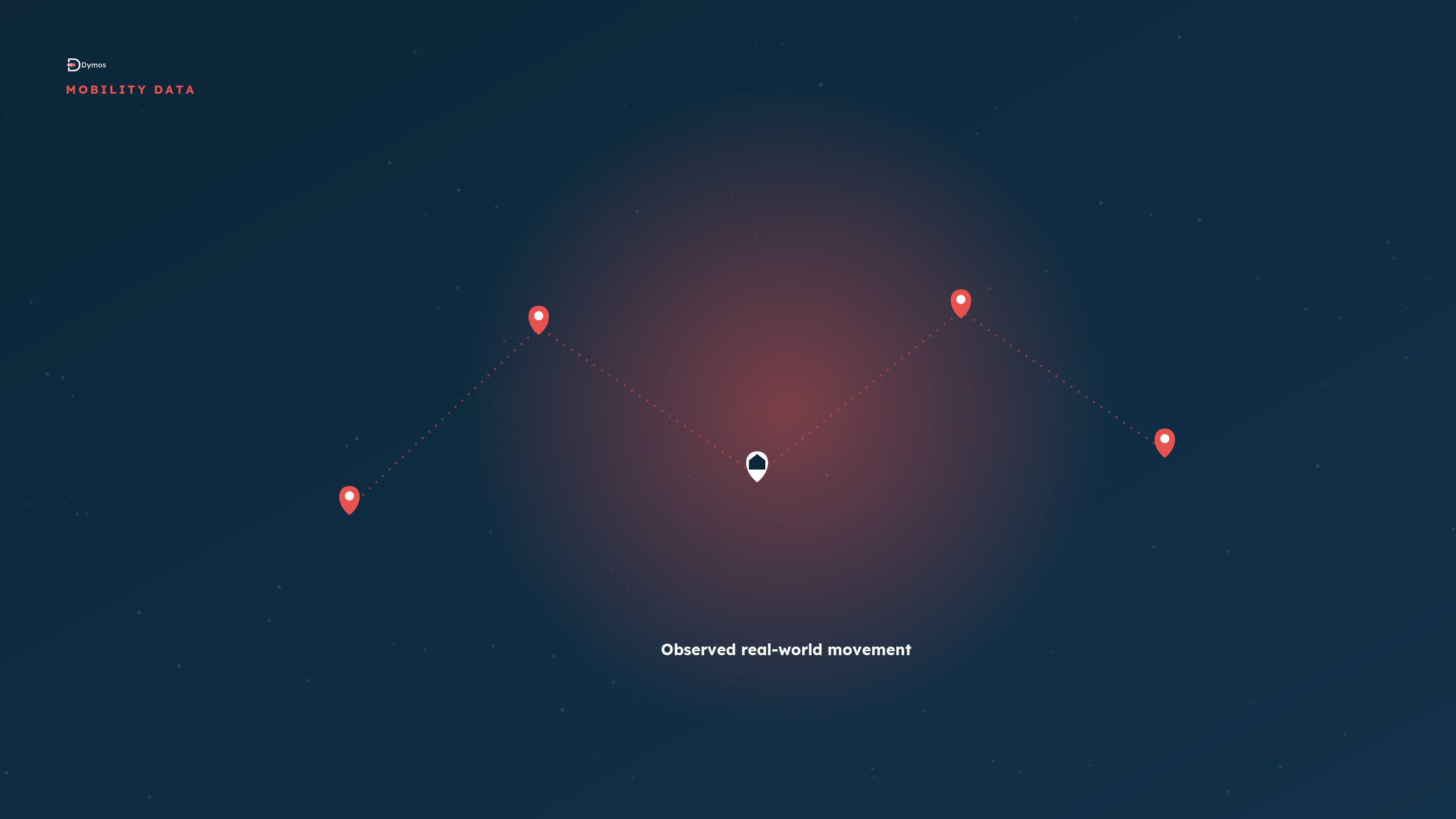
Mobility data captures where devices are observed over time: the places they visit, the areas they are based in, and the movement patterns that repeat. From those observations, a platform can understand real-world behavior at scale, rather than inferring it from age, gender, or a modeled profile.
It is the foundational layer beneath a lot of modern advertising. Audiences, home-location signals and identity enrichment are all stronger when they are built on observed behavior instead of assumptions. Mobility data is what makes that possible.
Where mobility data comes from
High-quality mobility data is sourced first-party, typically through software development kits embedded in mobile apps with user consent, and comes with clear lineage: every signal has a known origin and method behind it. Lineage matters more than volume. A large but murky dataset is harder to trust than a smaller one you can stand behind.
The strongest providers are quality-controlled at the point of collection, filtering noise and validating observations before anything is built on top. This is what separates a dependable foundation from a noisy one.
What is actually in the data
Mobility data usually contains a few core signals. Visits: the places a device was observed, and how often. Dwell: how long it stayed, which separates a genuine visit from someone simply passing by. Home and work areas: the general areas a device is based in, inferred from recurring patterns. And category affinity: the kinds of places a device tends to visit, from which behavioral interests can be built.
Together these turn raw location observations into something a platform can reason about: not just where a device was, but what that pattern of movement suggests.
How home location is inferred
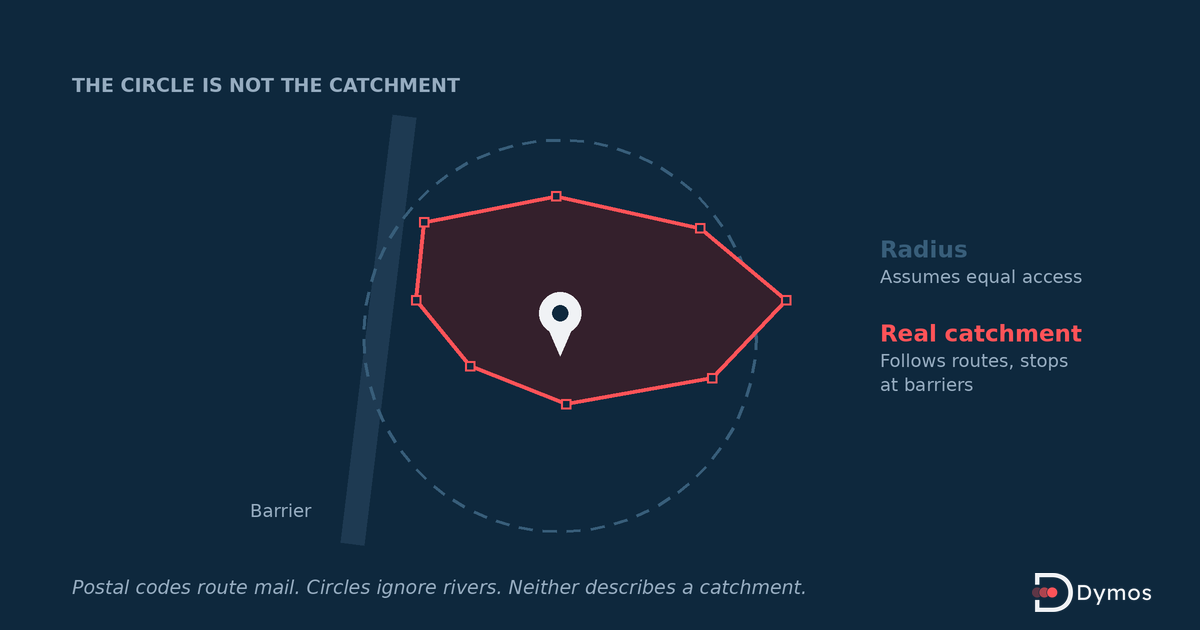
One of the most useful outputs is home location. A provider resolves the likely residential area of a device over time from recurring patterns, when it consistently returns to a place overnight, for example, and delivers that as an inferred area rather than a precise address.
This distinction is deliberate and important for privacy. The goal is a general residential area suitable for planning and activation, not a pinpoint on someone's front door. Good mobility data is designed to be useful at the area or household level, not to expose individuals.
Mobility data vs GPS, panel and survey data
Mobility data is often confused with adjacent data types, but the differences matter. Raw GPS is a stream of coordinates with no structure or meaning; mobility data turns those observations into visits, dwell and patterns you can actually reason about.
Panel data extrapolates from a small, recruited sample, so it is representative at best. Mobility data observes behavior at scale, which puts it closer to a census than a survey. And survey or declared data captures what people say they do, which often diverges from what they actually did. Mobility data's advantage is that it is observed, structured and large, evidence rather than a sample or a statement.
Why teams build on mobility data
Teams that build their own audiences and models reach for mobility data when they need a clean, observed signal underneath their work, rather than a finished segment someone else defined. It gives them ground truth: real behavior they can shape, model on, and measure real-world outcomes against.
It also solves a coverage problem. Instead of stitching together regional vendors, a single mobility source can provide consistent signal across many markets. And it replaces modeled or stale inputs with something observed, which tends to make everything built on top perform better.
How mobility data is used across channels
Because it is foundational, mobility data shows up across the stack. It builds visit-based and location audiences that reach people by where they went. It resolves home and work areas that anchor households for connected TV and enrich identity. It enriches existing identifiers and CRM records with real-world behavior. And it provides a ground-truth baseline for measuring real-world outcomes such as store visits.
In each case the same observed signal underpins the work, which is exactly why mobility is described as the foundational layer rather than a single product.
Mobility data and privacy
Because mobility data describes real-world movement, privacy is not optional. A privacy-first approach works with pseudonymous signals, not personal profiles, and treats location as area-level and household-level context rather than individual tracking.
Home location is delivered as an inferred area, not a precise address. Visits are grouped into pseudonymous audiences, not tied to named people. The result gives a platform behavioral insight and reach without exposing who anyone is, which is what makes mobility data safe to build a business on.
Bringing it together
Mobility data is observed real-world movement, sourced with clear lineage, structured into visits, areas and patterns, and delivered as a pseudonymous foundation. It is the evidence beneath audiences, identity and measurement, and its value is simple: when what you build rests on what people actually did, everything downstream gets more accurate.
Frequently asked questions
What is the difference between mobility data and location data?
Location data usually refers to a single point in space. Mobility data is the broader pattern of movement over time, the visits, dwell, and home and work areas that reveal real-world behavior, not just one position.
Is mobility data the same as GPS data?
No. GPS is raw coordinates. Mobility data structures those observations into visits, dwell and patterns, and adds home and work areas and category affinity, so it can be reasoned about and built on.
Is mobility data personal data?
Privacy-first mobility data works with pseudonymous signals, not personal profiles. Home location is delivered as an inferred area rather than a precise address, and visits are grouped into pseudonymous audiences.
How is home location worked out?
It is inferred from recurring patterns over time, such as where a device consistently returns overnight, and delivered as a likely residential area rather than an exact address.
How is mobility data used in advertising?
It is the foundation for building audiences, resolving home location, and enriching identity, and it provides a baseline for real-world measurement. Teams use it as observed signal to shape their own segments and models rather than relying on modeled or demographic inputs.
What makes mobility data high quality?
Clear lineage and quality control at the point of collection. A signal you can trace to a known origin and method is more valuable than a large but murky dataset.